 As those of you who have had me in class before might know, I have kind of a thing for the TV show Survivor. I don't think I have what it takes to be a sneaky person to go the distance on the show, but it's a perfect labratory of human behavior. We identified all the different types of groups that existed in the episode of Survivor we watched in class today, and although I didn't ask you to identify these in class, I know there are examples of the different types of group social interaction within the video as well (remember these? Cooperation, Conflict, Social Exchange, Coercion, and Conformity). The way all the different members of the tribe work together to build a shelter or approach a challenge? Cooperation. The way they all gang up on Billy to have him voted out of the tribe? Conflict. HOW they got the people to gang up on Billy even though they all didn't agree with Ozzy's strategy? Coercion. The way they all went along with Ozzy's dumb idea anyway? Conformity. My challenge for you today is go out and try to identify each of the different types of social interactions within not only the real life encounters that you have, but in different television shows or movies that you might watch. They're out there......
Friday, February 25, 2011
Survivor!
As those of you who have had me in class before might know, I have kind of a thing for the TV show Survivor. I don't think I have what it takes to be a sneaky person to go the distance on the show, but it's a perfect labratory of human behavior. We identified all the different types of groups that existed in the episode of Survivor we watched in class today, and although I didn't ask you to identify these in class, I know there are examples of the different types of group social interaction within the video as well (remember these? Cooperation, Conflict, Social Exchange, Coercion, and Conformity). The way all the different members of the tribe work together to build a shelter or approach a challenge? Cooperation. The way they all gang up on Billy to have him voted out of the tribe? Conflict. HOW they got the people to gang up on Billy even though they all didn't agree with Ozzy's strategy? Coercion. The way they all went along with Ozzy's dumb idea anyway? Conformity. My challenge for you today is go out and try to identify each of the different types of social interactions within not only the real life encounters that you have, but in different television shows or movies that you might watch. They're out there......

Thursday, February 24, 2011
People Who Need People.....
according to Barbara Streisand, are the LUCKIEST people in the world! Or at least, that is how the song goes :) As we move onto our next unit in Sociology, groups, we'll be examining WHY people need to be around others in order to be functioning members of society. Remember when we talked about the concept of solitary confinement in prisons, learned about it when we went to jail and the sheriff talked about it, as well as saw what it did to Andy in the movie Shawshank Redemption? Solitary confinement really messes with a person's brain as we are inherently social creature who need some sort of human contact to be a "normal" functioning members of society. It's like the monkeys in Harlowe's experiment who preferred the fuzzy metal monkey rather than the food metal monkey...we just want to be around somebody/thing who interacts with us. We're going to be identifying many different kinds of groups in class today: primary, secondary, kinship, interest, just to name a few. I challenge you for your blog post that is due on FRIDAY to list all the different groups of people you belong to and explain the roles that they have played in socializing you to American society.
Wednesday, February 9, 2011
And the Results are.....
Well, we did our data collection, and the results came in to answer our question of whether the kindness of strangers would stop a theft. As expected, there was a lot of variations to our answers. For the most part, we found that humanity was good and would step in, but we still had our lingering doubts, especially those who set up sting operations and had their wallets/phones/calculators nabbed. I'm glad to see that there were so many different methods of research done in the class as we could see the up and downsides of all of them.
I had mentioned to you the story of an Indian grad student at the University of Chicago, Sudhir Venkatesh, who wanted to study the workings of a typical African American Chicago street gang in the early 90s. He entered the housing projects and began surveying gang members by asking them how it felt to be black and poor, with a spectrum of potential answers from very bad, somewhat bad, neither bad nor good, somewhat good, to very good. As you can imagine, he didn't get too many answers, and he was actually held hostage by the gang overnight because they didn't know what he was up to. The result of this hostage experience was that he was befriended by the leader of the street gang and given an up close and personal look at the gang, getting much more rich detail. If you'd like to read an excerpt from the resulting book, Gang Leader For a Day, click HERE. If you'd like to see the movie, wait until next year when it comes to a theater near you :) If you want hear from Venkatesh, see below. Compare his research methods to your own. Do you think you got the best results that you could have, or were there barriers in the way from getting the true answers? Humans aren't too easy to study, are they? :)
I had mentioned to you the story of an Indian grad student at the University of Chicago, Sudhir Venkatesh, who wanted to study the workings of a typical African American Chicago street gang in the early 90s. He entered the housing projects and began surveying gang members by asking them how it felt to be black and poor, with a spectrum of potential answers from very bad, somewhat bad, neither bad nor good, somewhat good, to very good. As you can imagine, he didn't get too many answers, and he was actually held hostage by the gang overnight because they didn't know what he was up to. The result of this hostage experience was that he was befriended by the leader of the street gang and given an up close and personal look at the gang, getting much more rich detail. If you'd like to read an excerpt from the resulting book, Gang Leader For a Day, click HERE. If you'd like to see the movie, wait until next year when it comes to a theater near you :) If you want hear from Venkatesh, see below. Compare his research methods to your own. Do you think you got the best results that you could have, or were there barriers in the way from getting the true answers? Humans aren't too easy to study, are they? :)
Friday, February 4, 2011
Putting It Into Perspective...
 We took some time out today to look at the three perspectives of Sociology, functionalism, conflict theory and symbolic interactionism. Of the 3 perspectives, symbolic interactionism is always the trickiest of the bunch because the meanings we assign to symbols may not necessairly match those of others. We took a look at some Snowmageddon 2011 pictures and did some analysis of poor dudes snowblowing their roof, and so on. Pretty straight forward, right? But if you saw the picture above, could you be so sure of what was going on? Is it Mardi Gras in Japan? Are those go-go dancers on the top of the float? Is it legal to dance on a float? Is it a float? Are those guys going to do some kung-fu? What's going on? In order to fully understand symbolic interactionism, one needs to realize that there are 3 assumptions that go along with the theory: (1) you learn meaning through observing others, (2) you then base your behavior on those reactions, and (3) you use the meaning you have internalized to predict how others will respond to stimuli out there in society. So for the picture above, if you were Japanese, you would (1) know that this was taken at a matsuri (a local Japanese festival) which celebrates either a deity or a historical event for a village or town, and the float (dashi) is a part of a parade that goes through town, and you would (2) be following along with the parade, being loud and joyful and you would (3) know others would be loud and joyful because that's what you do at a matsuri. How can you interpret that which you see around YOU on a daily basis?
Freaks and Geeks
I loved this show when it was on TV. I didn't go to high school in the 1980s, but even today, there is a lot that is timeless when it comes to describing the high school experience. Today you watched the pilot episode for the series and did some application of our sociologists and perspectives to what you saw. Did Sam and and his guy posse have anything to do with Herbert Spencer's theory of Social Darwinism? How did Lindsay trying to fit in with the "burnouts" an example of conflict theory? How is the school dance connected to symbolic interactionism? Looking forward to the connections that you've made to prepare for next week's test!
Monday, January 31, 2011
I'm So Puzzled....
So while we're waiting to gather results on our theft study, we're taking a 2 day break to talk about sociological perspectives. We're going to introduce them formally tomorrow (get ready to meet the functionalist, the symbolic interactionist and the conflict theorist), we got a sneak peek at them through our puzzle activity today. Think to when you were a little kid putting a puzzle together. What was the first thing you would reach for? The edge pieces. Why? They put your picture in perspective. You know how big it is, you have an idea of what part of the picture goes where, etc. But then you didn't have any edge pieces today to start when you assembled your puzzle. A bit frustrating? I'd think so. You also didn't have the picture to start either. A bit more frustrating? You bet! How were you supposed to figure out what the picture was going to be? Well, you all came up with strategies to work through the problem. You knew to put the like-colored pieces together because those colors mean that they went together. So you figured out the FUNCTION of the different pieces, as well as the puzzle itself, you assigned SYMBOLIC meaning to the different pieces you used, and you might have felt a bit of CONFLICT between you and the puzzle. Looks like some sociology in a 100 piece puzzle box if you ask me :)
Friday, January 28, 2011
Would YOU Stop a Theft?
So we watched this video in class today, and other than getting a nice Jersey Shore vibe at 8AM (have their 15 minutes run out yet?), it poses a valuable sociological question: what factors come into play when you decide whether or not to stop a theft in progress? We took today to analyze the problem and discuss all the variables that might cause people to step in or not: whether the victim was a hottie or nottie, whether the victim was normal or a wackadoo, whether the victim was social or stayed to herself. Other variables come into play as well, such as value of the stolen item, the age of the victim, and where the theft takes place. We're going to take some time in class tomorrow to discuss how we can test the hypotheses that you all wrote in class today and partake in some research design (which would probably please Emile Durkheim if he were still around today). One of the ways you can collect data is through a survey you create on a website called http://www.polleverywhere.com/. By using everyone's favorite piece of technology (the cellphone) you can place your poll directly on your Facebook page or blog and have your friends respond. I've attached my survey here for you guys to check out, and reply to if you want. There are many other ways to gather data, and we'll come up with them in class tomorrow, then the world is yours to sociologically mess with :)
Make a live audience poll at Poll Everywhere
Thursday, January 27, 2011
All of a Sudden......
I was thinking sociologically when I was up at Lake Geneva with my husband, my dogs and his family over Labor Day weekend. My in laws rent a house on the lake every Labor Day weekend, and my hubs and I bring up our two labradors to go swimming in the lake. In preparation for this big outing, my husband, my father in law and I built a ramp the weekend before for the dogs to use to climb out of the lake as the pier is too tall for them to jump directly onto. As I watched my dogs go flying off the pier (and climbing up onto the ramp for another toss of the tennis ball), I was thinking about functionalism. No, really, I thought of functionalism! Not the functionality of the ramp, but of the function of dogs in society. People used to have dogs to help in the hunt, 4 legged garbage compactors cleaning up humanity's junk, provide warmth at night through snuggling....but it was not until the post WWII era when dogs-as-pets became a big deal (c'mon...you can't have a suburban 2 story, 2.2 child, white picket fence house without a dog!). And now, dogs-as-children/family members is the norm, not the exception. Today, 63% of American households have a pet, and we spend $45 billion annually on our pets (more than people spend on baby food!). An unscientific poll of my freshman Geography classes shows that a majority of them feel that their dog is a part of the family, just as much as the people are. Which brings me to my two dogs, Sadie and Stella, and their custom made dog ramp. They are definately examples of how the function of dogs in society has shifted since the Stone Age. I am one of those people who dresses them up at Halloween (yes, I will post pictures), and makes sure to have baby asprin cut into a dose just enough for Sadie, who is almost 9 and sounded like Rice Krispies when she got up this morning (snap, crackle and pop went her joints). And I'm OK with that.
Edited to Add: I actually am re-posting this from first semester as an example of how your "All of a Sudden" blog posts should work. This post makes me nostalgic as a week after we shot this video, my older dog (the one who jumps in first) got diagnosed with bone cancer, and had an amputation a week after that. Talk about treating dogs as humans--Sadie got chemo for 4 months. Geesh! I wonder if she will swim in circles next year with only one front leg to steer....... :)
Edited to Add: I actually am re-posting this from first semester as an example of how your "All of a Sudden" blog posts should work. This post makes me nostalgic as a week after we shot this video, my older dog (the one who jumps in first) got diagnosed with bone cancer, and had an amputation a week after that. Talk about treating dogs as humans--Sadie got chemo for 4 months. Geesh! I wonder if she will swim in circles next year with only one front leg to steer....... :)
Friday, January 21, 2011
What Makes Haas Tick.....
Since I'm asking you all to create a blog post to fill us all in on who you are and how you fit into the society that we will spend the semester studying, I figure I'd better share about myself too. You can use this post as a guide on how to set your first posts up as well.
I am a: teacher, wife, dog-mommy, devoted auntie, daughter, friend, theater-lover, craft-maker, book-reader, and a map-nerd (and there is a sociological term that goes along with this that we'll cover 2nd quarter!). I honestly think that if you took one of those things away from my personality, I wouldn't be the same person. If you're going to be a part of this society, I approach it as go in or go home, so I try to live life to the fullest and do as much as I can.
I've been influenced by many things. My parents (obviously) played a big role in my socialization process, and did a lot to guide me in the rights and wrongs of society. You'll actually see shades of my dad in class on a daily basis--I have his sense of humor. My 87 year old grandma that I will be talking about a lot in class? She's the cat's pajamas and I want to be just like her when I grow up :) She has been through a lot in life, and can still put a big ole' smile on her face. This sounds really dumb, but I'm also influenced by one of my dogs, Sadie. See, we found out in September that she has bone cancer, and she had a leg amputated shortly thereafter. She's crazy active, and we were worried that would slow her down. 4 months later, she's cancer-free (so far as we can tell) and she has not slowed down in the least. I think that's really cool that she can take a lickin' and keep on tickin'. And I also find it a reflection on society today that you can treat a dog for bone cancer, surgery, meds, chemotherapy and all, yet there are millions of Americans who, due to economic circumstances or otherwise, can't afford health care. Stratification at its worst.
My goals are different from yours as I am about twice your age :) I've done the education thing...and then some (go Illini!). I wanted to get a teaching job....and here I am. Homeownership? Check! Get married? Done! Kids? Well.....I spend about 12 hours a day with you and your peers here at school. A quiet house when I get home is a good thing :) Be a published card maker? Actually have that taken care of (check out a PaperCrafts magazine soon!). This doesn't mean that I have no goals or purpose in life. I figure I can always get better at everything that I do, and it's OK to try new things (like this whole blog thing....). Who knows? Maybe I'll be teacher of the year! :)
So that's me in a nutshell. I think I'm in the process of leaving my mark on society, and I'm looking forward to seeing the paths that you will take to blaze a trail on the world. Peace out (for now) peeps!
Thursday, January 20, 2011
Welcome Back to Shcool!
 Just wanted the opportunity to start off the semester with a chuckle on this, the first of many posts for our semester together in Sociology. Perhaps the next time this North Carolina company needs to be painting words on the street, they will hire a spellchecker......
Welcome! Looking forward to a fun semester!
***Mrs. Haas
Thursday, October 21, 2010
Volunteer Alert!
Stolen directly from Wednesday's Chicago Tribune.......
What: Bridge Communities will host an outdoor rally for "Sleep Out Saturday" in Glen Ellyn
What It's About: The free rally features live performances fromlocal band Flipside, DJ "Koz" and the crew from The Mix 101.9, an interactive game show, and testimonials from formerly homeless families who are graduates of and/or participants in the Bridge Communities program. After the rally, groups of teens, individuals and families will sleep outdoors in tents, boxes or cars to raise funds for Bridge Communities. The all-night sleepover to raise awareness about homelessness will be held in backyards, parking lots and parks across DuPage County. Last year's event raised more than $100,000.
When and Where: 6:30-8pm, November 6, outside at Bridge Communities, 505 Crescent Blvd, Glen Ellyn
The Charity: Bridge Communities is a non profit agency that serves more than 100 needy families annually in programs that include a two-year transitional housing program for families, life-skills mentoring, an auto program, financial counseling and employment training.
How You Can Help: To participate, sponsor a sleeper or donate funds, call 630-545-0610 or visit sleepoutsaturday.org
Tuesday, October 19, 2010
Everybody Needs Somebody....
We're watching Secrets of the Wild Child in class right now. The story of Genie (as well as those of Anna and Isabelle) are all heartbreaking examples of what happens when socialization goes wrong....or doesn't go at all. Taking a look at the video below of footage of Genie, stop back and think of the uphill struggle Genie has had in her life to try and fit into mainstream society (as far as I know, she's living in a nursing home-type facility in California and is in her 50s....she has never been able to catch up to her peers in terms of speech, behaviors and motor skills).
What was the main difference between all 3 of these girls? Isabelle had her mom. Even though she was not able to communicate with her daughter, the non-verbals of nurturing motherly behavior did a lot to point Isabelle in the right direction and she was able to "make it" in society, whereas those without that contact never made it, and in Anna's case, she died. If you're thinking that these 3 girls are isolated cases, think again. If you go to the website www.feralchildren.com you'll see many other examples of children who have found themselves in Genie, Anna, or Isabelle's shoes.
What was the main difference between all 3 of these girls? Isabelle had her mom. Even though she was not able to communicate with her daughter, the non-verbals of nurturing motherly behavior did a lot to point Isabelle in the right direction and she was able to "make it" in society, whereas those without that contact never made it, and in Anna's case, she died. If you're thinking that these 3 girls are isolated cases, think again. If you go to the website www.feralchildren.com you'll see many other examples of children who have found themselves in Genie, Anna, or Isabelle's shoes.
Monday, October 18, 2010
Who Helps You Become YOU?
Your agents of socialization, that's who! We've spent the first few days of our socialization unit examining how we learn about the norms of society and who teaches us those things so that we can be well mannered, positive, functioning members of society, and your agents of socialization (see the comprehensive list below) help you to reach this lofty goal at all points of your life. Remember, as pointed out in class, you never stop being socialized.....you all socialize me every day, which is why I can use words like "beast" in a sentence.....such as "Patrick Sharp is a beast on the ice this season!" Did I do that right? :) Anyway, here is a list of those who socialize you....feel free to comment if I forgot anybody!
*Family--Mom & Dad have first crack at teaching you how to be a good member of society. They not only teach you language and help you with motor skills, they teach you useful things like how to tie your shoes, when to say please and thank you, and give you a sense of right and wrong that you can use to interpret the world around you. To take a page out of Cooley's socialization textbook, you may see yourself as your parents see you......hopefully your parents have been your biggest fans and you see yourself positively as well.
*Friends/Peers--You enter school and all of a sudden the good manners and values your parents instilled in you may be erased by some of your peers who have no problems teaching you swear words, or that sharing may not indeed be caring :) You join clubs and sports and hang out with people that are just like you. Speaking of sports....
*Sports--Just as with Candyland, sports teaches you cooperation and teamwork, the value of hard work, and give you a competitive drive.
*Religion--Regardless of your religious affiliation, this is a major highway for values and morals to enter your brain. Golden Rule, anyone?
*Daycare--If your parents had to work, you might have been dropped off at KinderCare, or other places to keep your 3 year old self occupied and out of trouble. As I've seen in my family, this is a mixed bag. Daycare teaches you language skills and independence that you might not receive at home if you're with Mom 24/7, but you're not as connected to your parents.
*Work--If you have a job right now, that is part of your identity, and shapes your behaviors accordingly. As you get older, you are defined by your job....it's less about who you ARE but what you DO. I've found with family and friends who have retired that they have a real terrible time adjusting to their life without work because they don't have that anchor to guide their days.
*Media--Miss Katy Perry proved the point here, as does my gal pal Miley Cyrus. Little kids are very impressionable.....and heck, you teenagers are as well. You see all sorts of images on TV, on the Internet, and in movies and print media that tell you that you need to wear your hair "just like this" or dress "just like that" and life will be perfect for you. If you eat this or that, you'll be strong and popular. Clothing labels like Forever 21, Abercrombie and Fitch and Aeropostale are creating a line of their clothing for kids as young as 6 to hook them in to their brands at a young age. I see it with my nieces. Clothes from Kohls or Target are fine, but if it says Old Navy it's even better and means you're "cool" and "popular."
What do you think? Did I leave anything out?
Thursday, October 14, 2010
Socialization and Katy Perry
So we started talking about socialization in class today.....HOW you learn about your culture and how to do the right things (and avoid the wrong ones). Many different factors come into play with your socialization process: parents, friends, teachers, even the media play a part in shaping you into the person that you are. In discussing the media and children's programming, Sesame Street came up. I have to admit, I'm a child of the Street. LOVED the show when I was a kid, and if I ever have my own children, they will be Street kids as well (no purple dinosaur for them!). Well, in launching their 40th season on the air, they leaked a few segments that would be shown and my, the uproar about the Katy Perry appearance caused Sesame Street producers to yank the segment. Is Katy sending a wrong message to 3 year old Street lovers, especially the girls, or is she just teaching them about opposites? I'll let you decide, then you can chime in with your thoughts.....
Thursday, October 7, 2010
Does This Clash with My Culture? The Case of Cuy...

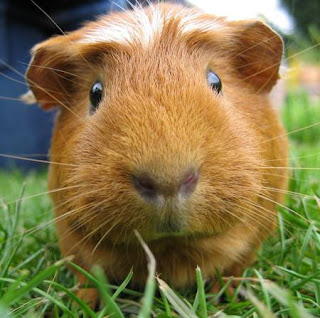
In discussing culture clash and culture shock in class, it has come to my attention that there is some amount of confusion as to what these terms mean. Let me clarify some of that for you with a visual. Take a look at the top picture. It is a traditional Ecuadorian meat dish called cuy. The meat has been been described as slightly chewy and salty, but delicious nonetheless. It has been prepared in Ecuador for hundreds of years by its indigenous citizens, who prepared cuy before beef cattle were introduced into their culture. Then take a look at the bottom picture. It's a guinea pig.....or what the top picture may have looked like before it was cooked. Yes, the people of Ecuador eat guinea pig (my best friend has done this on his travels to Quito, Ecuador when he was in college). A bit surprised? Grossed out? I have to admit I was too, especially when I looked at the other pictures of cuy on a website (this one is tame compared to the others). That sick feeling to your stomach is the culture SHOCK....it's that feeling that you have when you encounter something that is not part of your home culture. The CLASH here involves food. It's American menu items vs Ecuadorian menu items. Gotta think that Chili's or TGIFriday's is not going to be adding cuy to their menu anytime soon as the SHOCK of their patrons would make the item not a very big money maker.
Sunday, September 26, 2010
When George Met Abdullah....
Nobody wants to look racist, or insensitive to those from other cultures. However, watch the following video, with music added for comedic effect. What did you probably do while you were watching it?
You giggled didn't you? Why? Think about the norms of American culture. Men are not supposed to hold hands, but if you were to take a trip to the Middle East, this is expected behavior, and it's considered rude if you don't (and it doesn't have any homosexual overtones to it either). Our giggling (and the fact that the person who posted it felt the need to add it in) shows our ethnocentrism. Explaining the Saudi Arabian culture, and the expected behaviors that go along with it, shows cultural relativism.
You giggled didn't you? Why? Think about the norms of American culture. Men are not supposed to hold hands, but if you were to take a trip to the Middle East, this is expected behavior, and it's considered rude if you don't (and it doesn't have any homosexual overtones to it either). Our giggling (and the fact that the person who posted it felt the need to add it in) shows our ethnocentrism. Explaining the Saudi Arabian culture, and the expected behaviors that go along with it, shows cultural relativism.
That's Freegan Gross!
Or is it? We discussed the concept of subcultures and countercultures this week. Subcultures being those that are defined as those groups that set themselves apart from mainstream society due to their age, ethnicity, class, location or gender (thanks, Wikipedia). They may wear clothes to set themselves apart from the mainstream crowd, which sometimes backfires when their type of clothing becomes popular and everybody is wearing it. If you look to your left and right in the classroom, you will see subcultures all over the place. If you're on a sports team, that's a subculture. If you're part of a particular ethnic group, that's a subculture. You all are young, and I am old, which causes us to dress differently, especially as I would look totally ridiculous in Hollister clothing. My 87 year old grandma would look EXTRA ridiculous wearing a pair of Aeropostale sweatpants. We are part of different subcultures. If you look at COUNTERcultures, they reject the social norms and values of mainstream society that your garden variety subcultures ascribe to. Think hippies: they rejected the norms of 1950s post-war America and created their own society within America's borders that embraced sex, drugs, and rock and roll....all things that were seen as destructive to our country. Now fast forward to the freegans we talked about in class. What kind of culture are they....sub or counter?
 They definately reject the mainstream American values of consumerism and consumption, however when they are dumpster diving for their groceries, or looking on the curb for a new couch or a great new pair of pants, they are looking for things that are part of mainstream America. Think back to the woman we saw in the video clip. She followed a freegan lifestyle, yet took her money that she saved and went traveling around the world. I love to save money as much as the next person, but I just can't bring myself to camp outside of an Einstein's Bagels to grab my breakfast. Thoughts?
It's Totally NORMal....
If you're reading this post right now, it's because it's a norm of our school culture to stay on top of your homework. If you're wearing clothes while reading this, that's a norm too. Which way do you look when you cross the street? You look left first, then right, correct? Go to the UK and you need to look right first, then left. I can't tell you how many times I almost got hit by one of those big red buses when I went to London because I'm so trained to look left first. This is why they have signs like this painted on their street corners, so that dopey tourists like myself don't end up in their hospitals: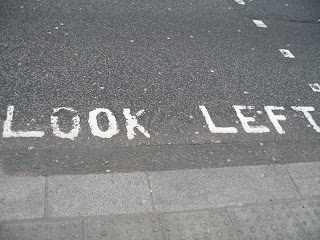 This pictures is not even really accurate. They usually post "Look Left Last". Use your imagination (and knowledge that they drive on the opposite side of the road than us) to think of what would happen if you looked left FIRST. If people don't look the right way when they cross the street, it's not just breaking a social norm, it's breaking the social norm called a more. You're causing some major social disruption if you don't look the right way when you cross the street. There is definately a "right" and a "wrong" way to how the chicken crosses the road both here in the US, and in other places around the world. You can go to San Diego and they cross some streets on a diagonal....choose not to take that path and you're slowing down traffic.
 ???? How on earth does that work? Well, you squat. Think about it. People in Japan traditionally don't sit on furniture, why would they sit on a toilet? If we went to Japan, especially after the long flight to get there, I'm sure we'd have to go...imagine walking into a bathroom and you see this? Confusion and pandemonium! If you understand Japanese culture, however, you realize not only are they germ-conscious, they also are big on preserving resources, and these potties use less water than ours do. Now I've done it. You'll be thinking of sociology the next time nature calls :)
This pictures is not even really accurate. They usually post "Look Left Last". Use your imagination (and knowledge that they drive on the opposite side of the road than us) to think of what would happen if you looked left FIRST. If people don't look the right way when they cross the street, it's not just breaking a social norm, it's breaking the social norm called a more. You're causing some major social disruption if you don't look the right way when you cross the street. There is definately a "right" and a "wrong" way to how the chicken crosses the road both here in the US, and in other places around the world. You can go to San Diego and they cross some streets on a diagonal....choose not to take that path and you're slowing down traffic.Another big norm that we have is going to the bathroom. Yes, it's grody to talk about bodily functions, but take a second to think about how that whole process works. I don't need to go into the details as we're all potty trained here. Now here's what a toilet looks like in Japan:
???? How on earth does that work? Well, you squat. Think about it. People in Japan traditionally don't sit on furniture, why would they sit on a toilet? If we went to Japan, especially after the long flight to get there, I'm sure we'd have to go...imagine walking into a bathroom and you see this? Confusion and pandemonium! If you understand Japanese culture, however, you realize not only are they germ-conscious, they also are big on preserving resources, and these potties use less water than ours do. Now I've done it. You'll be thinking of sociology the next time nature calls :)Tuesday, September 21, 2010
While We're Talking about Communication...

I was looking for political cartoons for my Geography class and stumbled onto this one, which fits in beautifully with our discussion of language and communication within the US. Agree or disagree with its message?
Friday, September 17, 2010
Like, I Need To, Ummmm, Write a Post
 Time was spent over the past few days discussing the role of language in the transmission of culture from generation to generation, as well as how the language itself is symbolic of the culture it represents. I know that a majority of you spent Thursday speaking extra slowly making sure not to use the word "like" in your sentences (I sure did during parent open house!), or listening to others speak, making tallies of how many times they used the word like in their sentences :) Language sure has changed! Text messages have abbreviated how we speak, we speak so quickly we've added in filler words to buy us time to come up with the vocabulary we need, we're dumbing ourselves down by using basic vocabulary instead of stretching our intelligence and using "big words," technology has turned nouns into verbs, i.e. friended, to Google, Facebooked, and we're a much more vulgar bunch than we have been in the past. I mean, take a look at this sign here.....honestly people, how many of you saw 'lol' instead of a drowning person?
Subscribe to:
Posts (Atom)